



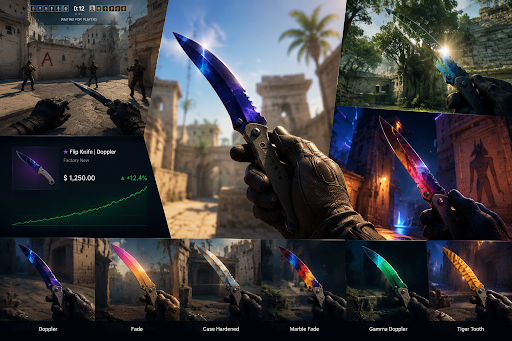
There is a very specific, universally understood boredom in a Counter-Strike lobby. The countdown is at 12 seconds. The IGL has already called the default strat. You have absolutely nothing to do. So, you press F.
In CS:GO, inspecting your knife was a fixed video file. It played out exactly the same way every single time. You memorized the exact frame where the blade caught the light, the precise moment the wrist flicked. It was a comfort blanket. A way to ground yourself when the pre-match anxiety started creeping in.
Source 2 broke that comfort blanket, and the community has spent the last year trying to glue the pieces back together. The transition didn’t just upgrade the graphics; it fundamentally altered the tactile relationship between the player and their virtual hands.
The Fidget Factor
Valve didn’t just change the lighting engine. They changed the interpolation of the animations. The old engine treated knife models like flat textures moving through space. The new engine treats them like physical objects with actual mass.
This is why the flip knife has completely dominated the fidget meta. The Butterfly and Karambit are flashy, sure. They look great in a highlight reel or a slow-motion fragmovie. But they are terrible for idle spinning. The flip knife, on the other hand, has a sharp, aggressive snap to it.
The sound design in CS2 gave it a much heavier, metallic click when it locks into the open position. It feels like a real tool. Players aren’t just looking at the skin anymore. They are feeling the weight of the animation. The micro-hesitations in the movement make it feel grounded in a way the older engine simply couldn’t achieve. It’s a subtle difference, but once you notice it, you can’t unsee it. The older animations feel like they are playing on a track. The new ones feel like they are being pulled by the player’s input.
Lighting and the Finish Fetish
This hyper-awareness of physical movement naturally bled into how players evaluate the finishes themselves. Physically Based Rendering completely destroyed the old hierarchy of skin rarity.
Matte finishes, which used to look crisp and clean, now look like painted plastic. They absorb light and look flat. Reflective finishes, however, went through the roof.
When you equip a highly polished blade, the environment actually matters. Take it to Ancient, and the metal reflects the green canopy. Drag it across the neon-lit streets of Anubis, and the specular highlights go crazy. The community has essentially turned into a bunch of virtual cinematographers, obsessing over how a few polygons react to a simulated sun.
If you spend any time on the trading forums, you’ll see endless debates about whether a flip knife doppler looks better in Phase 2 or Phase 4 under the new lighting. It’s no longer just about finding the right paint seed or checking the float value. It’s about finding the right map, the right time of day, and the right angle to make the screenshot look good. The visual payoff is entirely dependent on the world around it. This is why certain finishes that were considered mid-tier in CS:GO suddenly skyrocketed in popularity. The market didn’t just shift based on rarity; it shifted based on how well the skin interacted with the new lighting engine. A skin that looked boring in the old engine could suddenly become a grail item just because it caught the light nicely on Mirage.
The Economics of Boredom
We spend an absurd amount of time staring at our hands in this game. Between buying in the spawn, walking to the site, and waiting for the round to start, your knife is the only thing keeping you company.
This creates a weird psychological dynamic in the market. People are paying thousands of dollars for a digital item primarily to look at it during the 15 seconds before a round starts. The draw animations for the newer knives were designed with a focus on kinetic energy, but it’s the older, classic designs that benefit the most from the new engine.
The way the light rolls across the blade as it’s pulled from the sheath adds a layer of polish that makes the older models feel premium again. It’s a strange reality. We are playing a tactical shooter, but the economy is driven by how good a weapon looks when we are literally doing nothing. The inspect button has become a coping mechanism. A way to burn off nervous energy when you’re holding a tight angle and waiting for the enemy to push. It’s a small detail, but it speaks volumes about how the community interacts with the game. We don’t just play Counter-Strike; we inhabit it. And when we inhabit it, we want our hands to look good.
We tell ourselves it’s a game of millimeters and reaction times. We spend hours memorizing smoke lineups, practicing spray control, and studying demo perspectives. But when the round timer hits zero and the buy menu closes, none of that matters for the next fifteen seconds. You’re just standing in spawn, pressing F, watching a piece of digital metal catch a simulated light.
For More Updates Visit Our Website: The Bright Magazine
